클래스
클래스기반 언어에 익숙한 사용자들을 위해 추가되었다.
1
2
3
4
5
| class Person {}
console.log(typeof Person);
const me = new Person();
console.log(me);
|
클래스는 일종의 생성자 함수로 취급된다.
실행 컨텍스트 생성 과정에서 클래스가 평가되어 생성자 함수 취급 되는 것
좀더 조건이 치밀한 생성자함수라고 볼 수 있다.
사용법 또한 생성자함수 + prototype 과 유사하다.
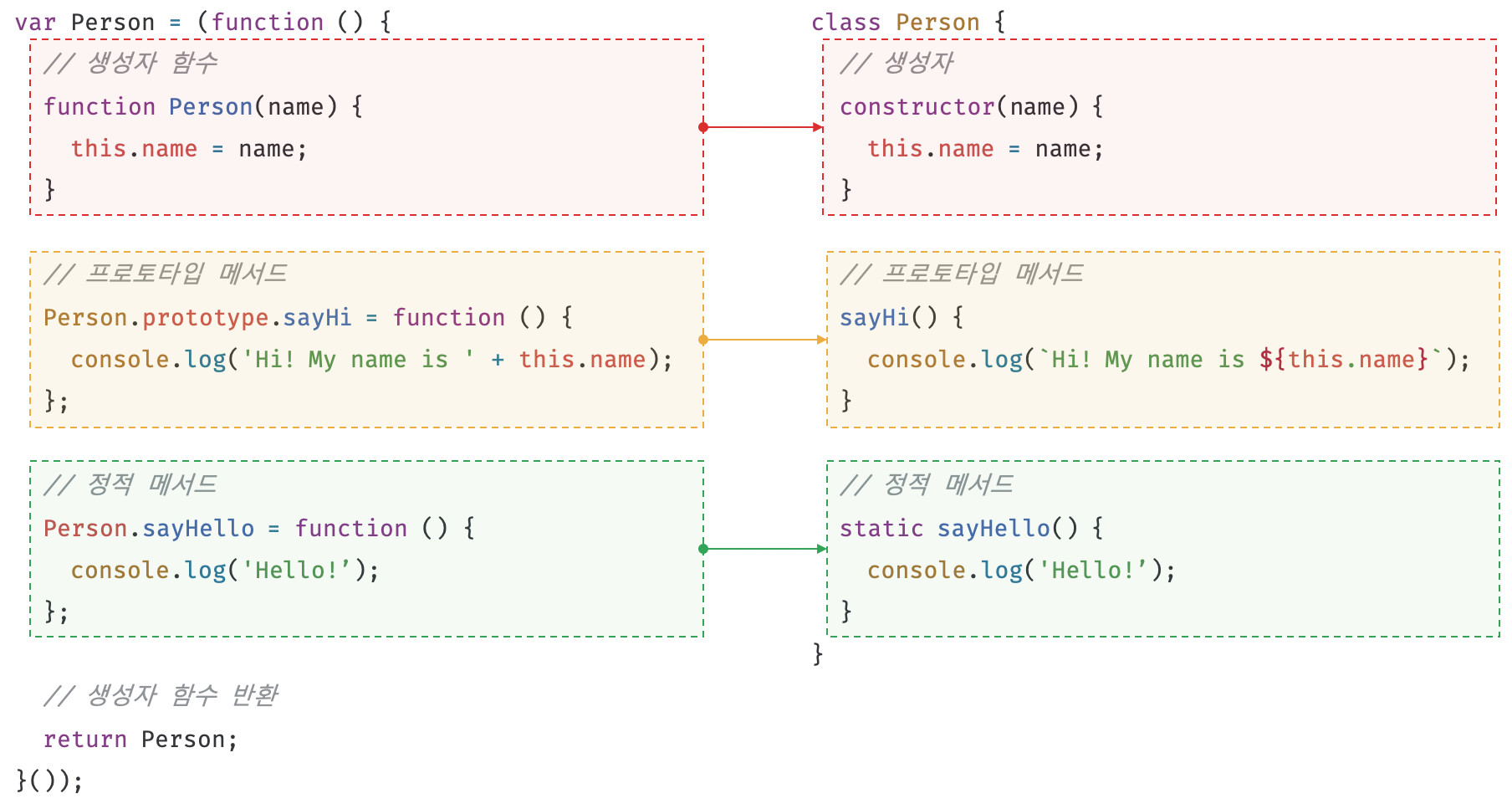
클래스에 정의되는 constructor, method 는 함수객체 선언문과 유사하지만
좀더 특별한 함수실행 컨텍스트를 생성한다고 보면 된다.
JS 에서 constructor 를 별도로 정의하지 않았다면 비어있는 constructor 가 자동으로 설정된다.
클래스 정의
함수정의할 때 리터럴 방식으로 정의하듯이
클래스도 리터럴형식으로 정의 가능하다.
1
2
3
4
5
|
const Person = class {};
const Person = class MyClass {};
|
클래스는 왠만하면 선언문으로 정의하는 것을 권장한다.
클래스 필드
클래스 필드는 Chrome72 이상, 최신 Node.js(버전 12 이상) 에서 동작
객체의 property 를 클래스 필드 문법으로 정의할 수 있다.
기존에는 constructor 에서 this 키워드를 통해 지정.
1
2
3
4
5
6
7
8
9
10
11
| class Person {
name = "default"
constructor() {
this.age = 10
}
}
let p1 = new Person();
console.log(p1)
|
클래스 접근자 함수
1
2
3
4
5
6
7
8
9
10
11
12
13
14
15
16
17
18
19
20
21
22
| class Person {
name = "default"
constructor() {
this.age = 10
}
get introduction() {
return `my name is ${this.name} and im ${this.age}`
}
set initial(str) {
[this.name, this.age] = str.split(' ');
}
}
let p1 = new Person();
console.log(p1.introduction)
let p2 = new Person();
p2.initial = "kouzie 20"
console.log(p2.introduction)
|
클래스 접근제한자
클래스 접근제한자는 Chrome72 이상, 최신 Node.js(버전 12 이상) 에서 동작
클로저를 통해 변수 은닉(접근제한) 하였는데
클래스에서는 # 키워드로 쉽게 접근제한자 설정이 가능하다.
1
2
3
4
5
6
7
8
9
10
11
12
13
14
15
16
17
18
19
| class Person {
#name = "default"
constructor(age=10) {
this.age = age;
}
get myName() {
return this.#name;
}
}
let p1 = new Person();
console.log(p1)
console.log(p1.name)
console.log(p1.age)
console.log(p1.myName)
|
주의사항
constructor 에 접근제한자 필드 정의 불가능
상속
extends 키워드를 통해 부모클래스-자식클래스 상속이 가능하다.
아래와 같은 명칭으로 부른다.
자식클래스: 하위클래스, 서브클래스, 파생클래스
부모클래스: 상위클래스, 수퍼클래스, 베이스클래스
1
2
3
4
5
6
7
8
9
10
11
12
13
14
15
16
17
18
19
20
21
22
23
| class Animal {
constructor(age, weight) {
this.age = age;
this.weight = weight;
}
eat() { return 'eat'; }
move() { return 'move'; }
}
class Bird extends Animal {
fly() { return 'fly'; }
}
const bird = new Bird(1, 5);
console.log(bird);
console.log(bird instanceof Bird);
console.log(bird instanceof Animal);
console.log(bird.eat());
console.log(bird.move());
console.log(bird.fly());
|
사실상 prototype chain 기능을 통해 상속이 이루어진다 볼 수 있다.
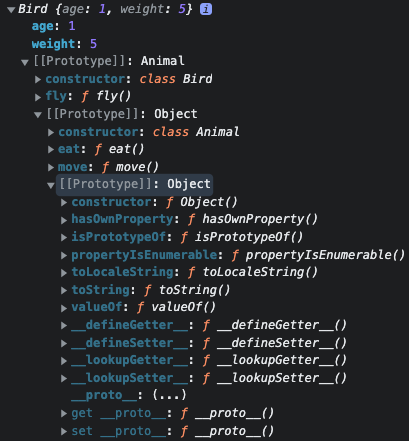
기존 생성자함수는 자동으로 이루어지는 Object 혹은 Function 객체의 prototype chain 형성 외에 명시적으로 상속을 표현할 수 있는 문법이 존재하지 않는다.
그런 의미에서 ES6 에 추가된 클래스 문법은 객체지향 관점에서 의미가 깊은 문법이다.
또한 클래스 선언문과 생성자함수가 사실상 같은 취급이기에 섞어서 상속구현 또한 가능하다.
1
2
3
4
5
6
7
8
9
10
11
12
13
14
15
16
| var Animal = (function () {
function Animal(age, weight) {
this.age = age;
this.weight = weight;
}
Animal.prototype.eat = function () { return 'eat'; };
Animal.prototype.move = function () { return 'move'; };
return Animal;
}());
class Bird extends Animal {
fly() { return 'fly'; }
}
const bird = new Bird(1, 5);
console.log(bird.eat());
|
constructor - super
부모클래스의 생성자 혹은 필드, 메서드에 접근할 때 사용하는 키워드
constructor 에서 super 호출전엔 this 키워드 사용이 불가능
constructor 에서 super 호출이 없으면 에러가 발생
1
2
3
4
5
6
7
8
9
10
11
12
13
14
15
16
17
18
19
| class Person {
name = "default";
age = 10;
constructor(name, age) {
this.name = name;
this.age = age;
}
}
class Student extends Person {
nickname = "nickname"
constructor(name, age, nickname) {
super(name, age);
this.nickname = nickname
}
}
let std = new Student("kouzie", 20, "jason");
console.log(std);
|
위와같이 부모클래스의 필드초기화시 사용
1
2
3
4
5
6
7
8
9
10
11
12
13
14
15
16
17
18
19
20
21
22
23
24
25
| class Person {
name = "default";
age = 10;
constructor(name, age) {
console.log("1.", this)
console.log("2.", new.target)
this.name = name;
this.age = age;
}
}
class Student extends Person {
nickname = 'nickname'
constructor(name, age, nickname) {
super(name, age)
this.nickname = nickname
}
}
let std = new Student("kouzie", 20, "jason");
console.log("3.", std)
|
또한 결과를 보면 Person 의 constructor 에서도 Student 의 인스턴스를 초기화 하는것을 확인할 수 있는데
첫번째 출력문에서 필드초기화도 제대로 되지 않은것으로 보아
실행 컨텍스트에서 클래스평가만 먼저 이루어지고 생성자의 호출 순서에 따라 코드실행되어 초기화되는 것을 확인할 수 있다.
생성자함수 때와 마찬가지로 this 가 암묵적으로 반환 및 바인딩되어
constructor 간 하나의 인스턴스를 초기화한다.
암묵적 constructor 생성
만약 자식클래스에서 constructor 를 별도정의하지 않을 경우 constructor 를 암시적 생성한다.
부모클래스의 생성자에 맞게 super 를 호출한다.
1
2
3
4
5
6
7
8
9
10
11
12
13
14
15
16
17
18
19
20
| class Person {
name = "default";
age = 10;
constructor(name, age) {
this.name = name;
this.age = age;
}
}
class Student extends Person {
nickname = 'nickname'
}
let std = new Student("kouzie", 20, "jason");
console.log(std);
|
의사 클래스 상속(pseudo classical inheritance)
기존에 생성자함수만을 사용했을 때에는 의사 클래스 상속 구현이 필요했다.
1
2
3
4
5
6
7
8
9
10
11
12
13
14
15
16
17
18
19
20
21
| var Animal = (function () {
function Animal(age, weight) {
this.age = age;
this.weight = weight;
}
Animal.prototype.eat = function () { return 'eat'; };
Animal.prototype.move = function () { return 'move'; };
return Animal;
}());
var Bird = (function () {
function Bird() {
Animal.apply(this, arguments);
}
Bird.prototype = Object.create(Animal.prototype);
Bird.prototype.constructor = Bird;
Bird.prototype.fly = function () { return 'fly'; };
return Bird;
}());
|
가독성이 안좋아 클래스 문법을 사용하는 것을 권장한다.
동적 상속
1
2
3
4
5
6
7
8
9
10
| class Base1 { }
class Base2 { }
let condition = true;
class Derived extends (condition ? Base1 : Base2) { }
const derived = new Derived();
console.log(derived instanceof Base1);
console.log(derived instanceof Base2);
|